
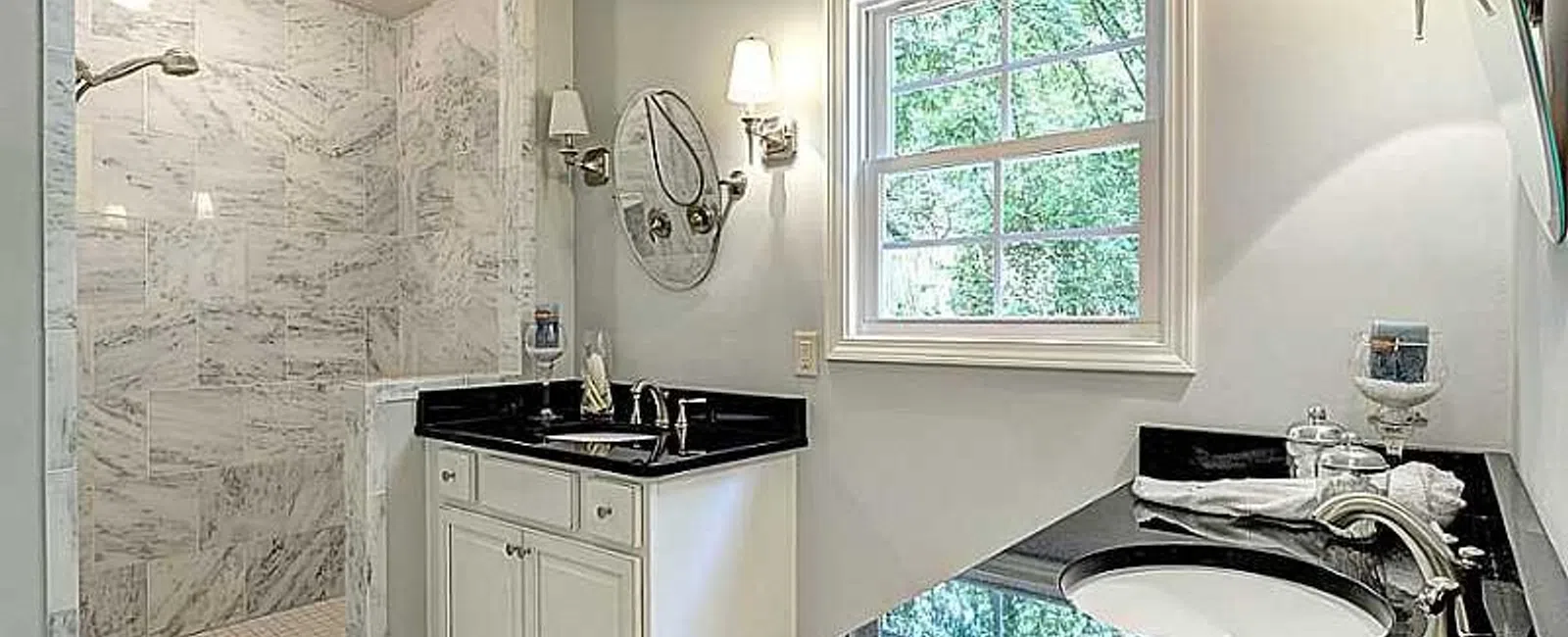
Most bathroom remodels take 3 to 6 weeks from demolition to the final walkthrough. A cosmetic update with a new vanity, toilet, fixtures, and tile in the same layout can finish in 2 to 3 weeks. A full gut remodel that relocates plumbing, moves walls, or reconfigures the layout typically takes 5 to 7 weeks due to the extra rough-in work and inspections.
These timelines are general averages and can vary based on the bathroom size, layout, material availability, permits, inspections, water damage, and other project-specific factors.

A bathroom may be smaller than a kitchen, but it is still a complex remodel. Waterproofing, tile, plumbing, electrical, and fixture installation must all occur in the correct order. Several steps also need time to cure or set before the next phase can begin. Rushing those steps is how tile, grout, or waterproofing problems show up later.
Bathroom Remodel Timeline, Phase by Phase
For a standard full bathroom remodel in an existing footprint, the work usually moves through the following phases:
- Days 1-2: Demolition - The old tile, vanity, tub or shower, toilet, and flooring are removed. The surrounding areas of the home are protected from dust, and the walls and floors are opened up so we can see what is behind them. In older north metro Atlanta homes, this is often when water damage, soft subflooring, or framing issues behind an old shower are discovered.
- Days 3-5: Plumbing and electrical rough-in - New supply lines, drains, outlets, lighting, exhaust fans, and other electrical work are completed during this phase. If the layout is staying the same, this part is usually quicker. If the shower is moving, a double vanity is being added, or the plumbing layout is changing, this phase can take longer.
- Around day 5: Rough-in inspection - In most metro Atlanta jurisdictions, plumbing and electrical work must be inspected before the walls are closed. The inspection itself may be quick, but it has to be scheduled with the county or city. A good contractor plans for that inspection window before it slows the project down.
- Days 6-9: Waterproofing, backer board, and drywall - The shower area is waterproofed, backer board is installed where needed, and the walls are prepped for tile and finishes. This step should never be rushed. Proper waterproofing is what protects your framing, subfloor, and surrounding rooms from long-term water damage.
- Days 9-16: Tile installation - Floor tile and shower tile are set, then grouted and sealed as needed. Tile takes time because mortar, grout, and sealers all need proper cure windows. Skipping those cure times may save a day during the remodel, but it can cause failure later.
- Days 16-22: Fixtures and finishes - The vanity, countertop, toilet, shower glass, mirror, lighting, hardware, and final fixtures are installed. Shower glass is often measured after the tile is complete, so custom glass can add a few days to the process, depending on lead time.
- Final days: Punch list and walkthrough - The final stretch includes caulking, touch-ups, final cleaning, and a walkthrough to make sure the bathroom is finished correctly before the project is complete.
Cosmetic Refresh vs. Full Bathroom Remodel
The fastest way to estimate your timeline is to understand what type of project you are actually doing. A simple refresh and a full bathroom remodeling project differ significantly in terms of time, labor, and inspections.
- Cosmetic refresh: 2 to 3 weeks - This usually includes replacing the vanity, toilet, fixtures, mirror, lighting, and tile while keeping the existing layout. Plumbing stays in the same place, which keeps the project moving faster.
- Full gut, same layout: 3 to 5 weeks - Everything comes down to the studs, but the shower, toilet, and sink stay in roughly the same locations. This allows for a deeper remodel without the added time of major plumbing relocation.
- Full gut with layout changes: 5 to 7+ weeks - This includes projects that move the shower, convert a tub to a walk-in shower, add a double vanity, expand into an adjacent closet, or rework the floor plan. These projects take longer because they often require extra rough-in work, inspections, and custom materials.
The moment you move, where the water goes changes. That does not mean layout changes are a bad idea. In many bathrooms, a better layout is the whole point. It just needs to be planned from the beginning.
Why Moving Plumbing Changes the Timeline
Relocating plumbing is one of the biggest hidden drivers of timeline delays in a bathroom remodel. Moving a toilet, shower drain, or vanity means opening the floor or walls, rerouting drain and supply lines, setting everything at the proper slope, and passing a rough-in inspection before the space can be closed back up.
In most metro Atlanta jurisdictions, including Cobb, Cherokee, Fulton, and Forsyth, plumbing changes often require a permit and inspection. The inspection may not take long, but it has to be scheduled, and the county or city controls that pace. A contractor who plans ahead can keep the project moving. One who forgets to schedule inspections can lose days waiting.
What Causes Bathroom Remodel Delays?
Based on the bathroom remodeling projects we have completed across Marietta, Sandy Springs, Cumming, and the North Metro Atlanta area, delays usually stem from a few common issues.
- Water damage was discovered during demolition. Rotted subflooring, damaged framing, or hidden leaks behind an old tub or shower must be repaired before the bathroom can be rebuilt.
- Custom shower glass and vanities. Some items are measured or ordered after other phases are complete. Custom shower glass, specialty vanities, and custom countertops can add lead time.
- Special-order tile. Backordered tile can hold up one of the longest phases of the project. This is why selections should be made before demolition whenever possible.
- Skipped cure times. Waterproofing, mortar, grout, and sealers need time to set properly. Rushing those steps can lead to cracked grout, loose tile, leaks, and callbacks later.
- Mid-project changes. Changing the tile layout, moving a fixture, switching materials, or adjusting the design after rough-in can create delays because completed work may need to be revised.
How We Keep Your Bathroom Remodel on Track
The JMJ Construction Group team brings more than 50 years of combined construction experience to every bathroom remodel. We have learned that the two biggest ways to protect the schedule are ordering long-lead items early and respecting the steps that cannot be rushed.
Before work begins, we help finalize selections, plan around inspections, order key materials, and map out the project sequence. During construction, we coordinate the trades so that plumbing, electrical, waterproofing, tile, and fixtures occur in the right order, without unnecessary downtime.
We also do not cut corners on the parts you cannot see, including waterproofing, proper slope, plumbing connections, and cure time. Those details are what keep a finished bathroom looking good and performing correctly for years.
If you are planning a bathroom remodel in Marietta, Roswell, Woodstock, Cumming, Sandy Springs, or anywhere in the North Metro Atlanta area, we can provide an honest timeline before the project starts.
Frequently Asked Questions
How long does a small bathroom remodel take?
A cosmetic refresh of a small bathroom with a new vanity, fixtures, toilet, and tile in the same layout typically takes 2 to 3 weeks.
Can I use my only bathroom during a remodel?
Not the bathroom being remodeled. If it is your only full bathroom, you should plan for alternate arrangements during the work. In single-bathroom homes, we do everything we can to compress the timeline while still following the right installation steps.
Why does bathroom tile take so long?
Tile takes time because it involves setting, grouting, sealing, and allowing time for curing between steps. Skipping those cure windows is one of the most common causes of later tile and grout failure.
Do I need a permit to remodel a bathroom in Georgia?
If you are moving plumbing, electrical systems, or walls, most metro Atlanta jurisdictions require a permit and a rough-in inspection. A like-for-like cosmetic update may not require one. JMJ Construction Group handles permitting as needed.
What is the time difference between a tub-to-shower conversion and a full bathroom remodel?
A straightforward tub-to-shower conversion in the same footprint is usually on the shorter end of the timeline. Once you move the drain, change the layout, or expand the space, the project moves closer to a full-gut remodel timeline.
Ready to Remodel Your Bathroom?
JMJ Construction Group handles bathroom remodeling throughout Marietta and the North Metro Atlanta area with clear scheduling, proper sequencing, and a single point of contact from start to finish. Request a free estimate, and we will map out a realistic timeline for your space.