
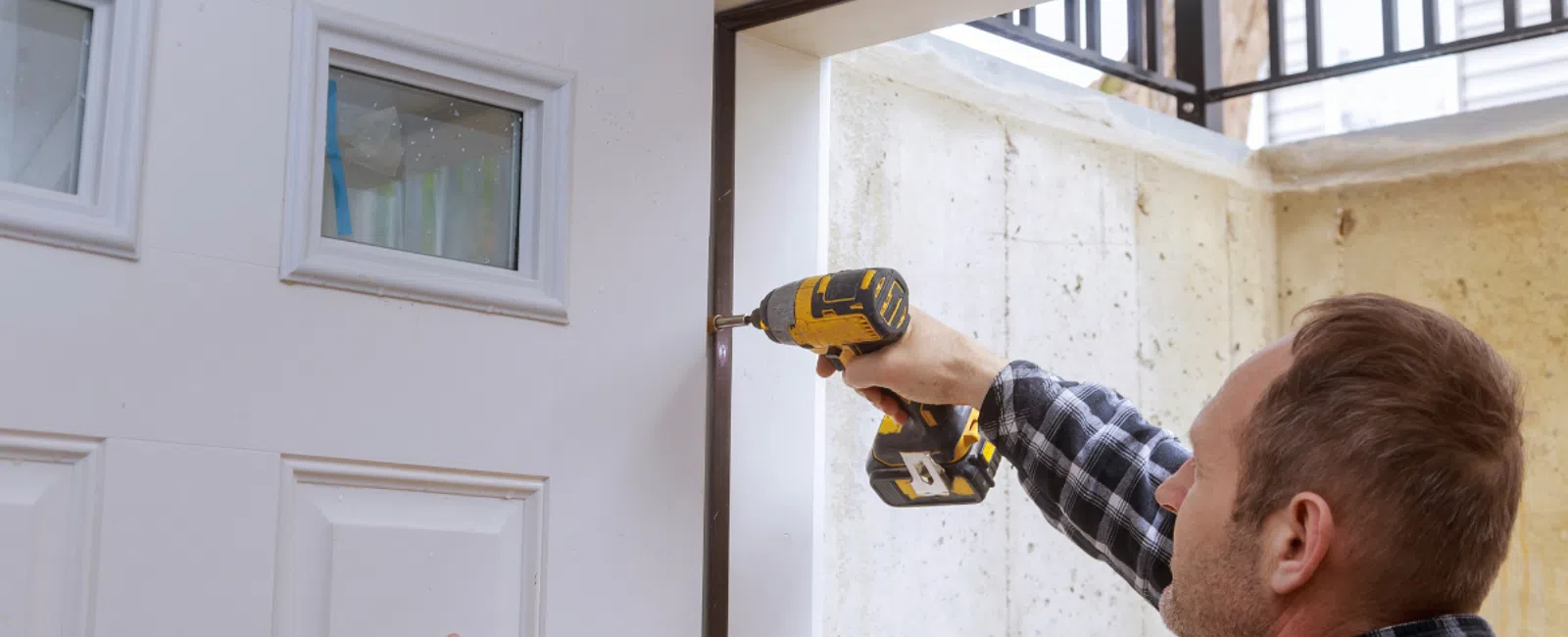
Most sagging
doors are fixed at the top hinge. Tighten the hinge screws first, and if the
door still drops, replace one short screw in the top hinge with a 3-inch screw
that reaches the wall framing behind the jamb. That one change is usually
enough to pull the door back up and square. If it does not, the problem is
usually a stripped screw hole, a hinge that needs a small adjustment, or, less
often, a house that has moved.
Below is the
full sequence we use, in the order that saves the most time, plus the signs
that a sticking door is telling you something about the house rather than the
hinges.
How to Tell Your Door Is Sagging
A sagging door
has dropped away from its top hinge, so it tilts toward the floor on the latch
side. The symptoms are easy to spot once you know what to look for:
- The gap along the top of the door is wider on the hinge side than on the latch side.
- The door rubs the jamb near the top corner on the latch side.
- The bottom corner on the latch side scrapes the floor, rug or threshold.
- The latch no longer lines up with the strike plate, so you have to lift or push the door to close it.
Close the door
and look at the gap around all three edges. Where it pinches and where it opens
tells you which way the door needs to move.
Why Doors Sag
The most common
cause is plain wear. Every swing puts weight on the top hinge, and over years
the screws work loose. Many interior doors are hung with short screws that only
reach into the thin door jamb, not the framing behind it, so there is not much
for them to hold. Once a hole strips, tightening the screw does nothing.
Heavier doors
sag faster. Solid wood and solid core doors, exterior doors, and doors with
glass all load the hinges more than a hollow core interior door.
Humidity plays
a part too. Wood takes on and gives off moisture as the air around it changes,
and it swells and shrinks as it does. In metro Atlanta, a door that closes fine
in winter can start rubbing in the humid months, which can look like sag when
it is really swelling.
The least
common cause, and the one worth ruling out, is movement in the house itself. We
cover the warning signs for that further down.
Start by Tightening the Hinge Screws
Open the door
and check every screw on every hinge, on both the jamb side and the door side.
Start with the top hinge, since it carries the most load.
Use a hand
screwdriver, not a drill. A drill makes it easy to overtighten and strip the
hole you are trying to save. If every screw bites and snugs up, close the door
and check the gaps again. Sometimes that is all it takes.
Replace One Top Hinge Screw With a 3-Inch Screw
If the screws
are tight and the door still sags, this is the fix that solves most cases.
Remove one screw from the jamb side of the top hinge, choosing the center hole
or the one nearest the middle, and drive a 3-inch screw in its place so it
passes through the jamb and into the framing behind it.
Drive it until
it is snug against the hinge, then finish with a quarter turn by hand. The
screw pulls the top hinge, and the jamb with it, back toward the framing, which
lifts the latch side of the door. Check the gaps as you go. You will often see
the top gap and the latch side gap change together.
Two cautions.
First, pick a screw whose head sits flush in the hinge leaf. A head that sticks
out will keep the door from closing. Second, watch the door trim while you
tighten. If the trim joints start to open, stop, because you are pulling the
jamb out of line.
Repair Stripped Screw Holes With Glued Dowels
If a screw
spins without tightening, the hole is stripped. The quick fix is to pack the
hole with wooden toothpicks or a golf tee dipped in wood glue, trim it flush, and drive the screw back in. That holds on a light interior door.
For a repair
that lasts, drill the hole out, coat a 3/8-inch hardwood dowel with carpenter's
glue, tap it in until it is flush with the jamb, and let the glue dry. Then
drill a new pilot hole into the dowel and reinstall the hinge. The screw now
bites into solid wood instead of crushed fibers.
Shim or Adjust the Hinges if the Gaps Are Still Off
When the screws
hold but the door still sits crooked in the opening, the hinge position needs a
small change. The simplest method is a thin shim behind a hinge leaf on the
jamb side. Trace the hinge on a manila folder or piece of cardboard, cut it
out, loosen the hinge, slip the shim behind it, and retighten.
A shim pushes
that part of the door toward the latch side. On a door that is rubbing at the
top latch corner, a shim behind the bottom hinge tips the top of the door back
toward the hinge side and opens up the tight spot. Add one layer at a time and
test between each.
Finish
carpenters often bend the hinge knuckles slightly instead of shimming. It is
faster, but easy to overdo, so go slowly.
Adjust the Strike Plate if the Latch Still Misses
Once the door
hangs evenly, the latch may still land a little high or low on the strike
plate. If it is only slightly off, file the opening in the strike plate so the
latch drops in cleanly. If it is off by more than that, move the strike plate,
fill the old screw holes and chisel the mortise to match.
Plane or Sand the Door Only as a Last Resort
Taking wood off
the door should be the last step, not the first. Once the hinges are right,
many doors that seemed too big fit fine again.
If the door
still rubs, close it, scribe a line along the edge where it binds, then sand or
plane right up to the line and not past it. Seal the bare edge with paint or
stain right away so it does not soak up moisture and swell again.
If the door
only sticks in the humid months, hold off on planing until it has been dry for
a while. Trim it in July and you may have a door with a visible gap in January.
When a Sagging Door Points to Something Bigger
Most of the
time, a sagging door is a hinge problem. Occasionally, it is the first thing a
homeowner notices when the house is moving. These are the patterns that deserve
a closer look before anyone adjusts or trims the door:
- Several doors in the same part of the house start sticking at around the same time.
- Cracks run out from the corners of the door frame, in the drywall above the door or in the tile or brick nearby.
- The floor near the door slopes, feels bouncy or has a noticeable dip.
- The hinges are tight and the door hangs fine, but the frame itself is no longer square in the opening.
- The door changed quickly after a remodel, especially one where a wall was removed or opened up.
In those cases,
shimming hinges and planing the door only hides what is happening. The right
next step is to find out why the frame moved, and sometimes that means a
structural engineer looks at it before any repair work starts.
When to Call a Contractor
Plenty of
homeowners handle the hinge screw fix themselves in a few minutes. It makes
sense to bring in a licensed contractor when the jamb is split or the screws
will not hold even after repair, when an exterior door has rot in the jamb or
threshold, when the frame is out of square, or when the door is damaged enough
that replacing it is the better answer.
JMJ
Construction Group handles door repair and door replacement as part of our
smaller projects, alongside drywall repair, trim, painting, and the rest of the
to-do list. Because we are a licensed general contractor, we can also tell you
when a sticking door is a sign of something more and handle that too. Contact us today!
Frequently Asked Questions
How do you raise a door that has dropped?
Tighten the top
hinge screws first. If the door still sits low on the latch side, replace one
screw in the jamb side of the top hinge with a 3-inch screw that reaches the
wall framing. That pulls the top of the door back toward the hinge side and
lifts the latch side.
What are the common causes of a door sagging?
Loose or
stripped hinge screws are the most common cause, usually because short screws
only reach into the thin jamb. Heavy doors, seasonal swelling from humidity
and, less often, movement in the house can also make a door sag or rub.
How do you fix a door that jiggles when it is closed?
A door that
rattles when closed usually has a small gap between the latch and the strike
plate. Adjusting the strike plate, or bending its small tab slightly toward the
stop so the latch sits tighter, typically solves it. Worn weatherstripping on
exterior doors can cause the same thing.
How do you fix a door that won't latch?
Check whether
the door has sagged first, because a dropped door is the most common reason the
latch misses the strike plate. Fix the hinges, then file the strike plate
opening or move the plate so the latch lines up.
Why is my door sticking at the top?
A door that
rubs at the top corner on the latch side has usually sagged away from its top
hinge. Tighten the top hinge or add a long screw into the framing before you
plane anything off the door.
Can a sagging door be a sign of foundation problems?
It can, but it is not the usual cause. Movement is worth checking when several doors stick at once, when cracks run from the corners of door frames or when floors near the door slope. In those cases, have the cause diagnosed before adjusting the door.